
How can analyzing case studies from Scrum certification programs help candidates understand real-world applications of Scrum principles and improve their practical skills?
Posted bySCRUMstudy® on August 06, 2024
Categories Agile Certification Scrum Training
Scrum certification case studies provide valuable insights into the practical application of Scrum in various industries and project environments. These case studies illustrate real-world scenarios where Scrum principles and practices have been successfully implemented, highlighting challenges faced and solutions devised by teams.
Agile and Scrum certification training case studies from Scrumstudy highlight the practical applications of Agile principles and Scrum methodologies in diverse industries. These case studies showcase real-world scenarios where teams have successfully implemented Agile frameworks to improve productivity, enhance collaboration, and deliver high-quality products. By examining challenges and solutions in various sectors, such as IT, healthcare, and finance, these case studies provide invaluable insights into best practices and strategies for overcoming obstacles. Scrumstudy's comprehensive training equips professionals with the knowledge and skills needed to drive effective Agile transformations and achieve organizational success.
Advancing Career Prospects
Scrum certification serves as a testament to your understanding and proficiency in Agile methodologies, making you a valuable asset to any organization adopting Agile practices. Employers actively seek certified Scrum Masters and Product Owners to lead teams and streamline processes, knowing that these individuals can drive productivity and innovation.
Gaining Practical Knowledge
Certification in Scrum involves comprehensive training that equips you with practical skills to manage projects effectively. From sprint planning and backlog grooming to daily stand-ups and retrospective meetings, certified Scrum professionals are well-versed in optimizing workflows and fostering a collaborative environment conducive to success.
Meeting Industry Standards
Employers increasingly prefer candidates with recognized certifications that validate their expertise. By becoming Scrum certified through reputable organizations like ScrumStudy, professionals align themselves with industry standards and demonstrate their commitment to continuous learning and improvement.
Networking Opportunities
Obtaining Scrum certification also opens doors to a vast network of professionals in the Agile community. Networking with peers and experts can provide insights into best practices, career advice, and potential job opportunities that may not be advertised publicly.
In conclusion, Scrum certification not only enhances your skills and knowledge but also boosts your credibility in the competitive job market. It validates your ability to adapt to dynamic project requirements and deliver results efficiently. Whether you are aiming for career advancement or exploring new opportunities, investing in Scrum certification can significantly accelerate your professional growth and open doors to exciting possibilities in Agile project management.
What criteria or attributes are typically exhibited by top students in Scrum certification programs?
Posted bySCRUMstudy® on June 29, 2024
Categories Agile Product Owner Scrum Scrum Guide Scrum Master Scrum Team

Scrum certification is a coveted achievement for professionals in the field of project management, offering a structured approach to mastering Scrum practices as delineated in the SBOK (Scrum Body of Knowledge) Guide. Top students in Scrum certification programs distinguish themselves through a deep understanding of the Agile framework, exceptional problem-solving skills, and the ability to effectively collaborate within a team. These high achievers not only excel in grasping the theoretical aspects of Scrum but also demonstrate practical proficiency in applying its principles to real-world projects. Their dedication to continuous improvement and mastery of Scrum roles, events, and artifacts positions them as valuable assets in any organization striving for efficiency and innovation.
Scrum certification high achievers are professionals who have demonstrated exceptional knowledge and proficiency in Agile methodologies through rigorous training and examination. These individuals exhibit a deep understanding of Scrum principles, practices, and roles, enabling them to effectively lead teams and drive projects to success. Their certification signifies not only their theoretical expertise but also their practical ability to implement Scrum frameworks in diverse organizational contexts. As high achievers, they play pivotal roles in fostering collaboration, boosting productivity, and delivering value to stakeholders through iterative development cycles and continuous improvement.
SCRUMstudy certifications have a profound impact on individuals and organizations. These certifications validate professionals' expertise in Scrum/Agile methodologies, equipping them with the knowledge and skills to drive organizational agility and innovation. For individuals, SCRUMstudy certifications open doors to new career opportunities and advancement in roles related to project management, product development, and business transformation. Employers benefit from certified professionals who can lead successful Scrum projects, optimize processes, and deliver value to customers efficiently. Ultimately, SCRUMstudy certifications contribute to improved project outcomes, enhanced organizational performance, and sustained competitive advantage in today's dynamic business landscape.
Obtaining a Scrum Master Certification can significantly boost team productivity by equipping leaders with the skills needed to facilitate agile processes effectively. Certified Scrum Masters are trained to implement best practices, foster clear communication, and remove obstacles that hinder progress. This certification ensures that Scrum Masters are proficient in coordinating Scrum activities, leading to more efficient sprint planning, execution, and delivery. As a result, teams can work more cohesively, respond to changes promptly, and achieve higher output and quality in their projects.
Scrum Certification Programs
Posted bySCRUMstudy® on June 21, 2024
Categories Agile Certification Scrum Training

Scrum certification programs offer structured training and validation of expertise in Scrum methodologies. They typically include foundational courses like Certified ScrumMaster (CSM) or Professional Scrum Master (PSM), which cover the fundamentals of Scrum framework, roles, ceremonies, and artifacts. Advanced certifications may focus on scaling Scrum for larger projects or specialized roles within Agile environments. These programs combine theoretical learning with practical exercises and assessments to ensure participants grasp key concepts and can apply them effectively. Scrum certification not only enhances credibility but also equips professionals with the skills to lead Agile teams, foster innovation, and deliver value-driven projects successfully.
Scrum Certification Training Programs offer comprehensive education on Scrum principles and practices, preparing professionals to effectively implement and manage Scrum projects. These programs cover essential topics such as Scrum roles, events, artifacts, and the principles that underpin the framework. Participants learn through interactive sessions, case studies, and practical exercises designed to simulate real-world scenarios. Upon completion, individuals gain a deep understanding of how to apply Scrum to enhance productivity, improve team collaboration, and deliver value-driven results in agile environments. These certifications are ideal for aspiring Scrum Masters, Product Owners, and team members looking to advance their careers in agile project management.
Scrum Master Certified (SMC™) course by SCRUMstudy is an intensive program designed to equip professionals with the knowledge and skills required to excel in the role of a Scrum Master. This course covers the core principles of Scrum, focusing on facilitating, coaching, and leading agile teams. Through comprehensive modules and hands-on exercises, participants learn how to manage projects efficiently, remove impediments, and ensure the successful delivery of products. The SMC™ certification is globally recognized, validating one's expertise in implementing Scrum practices effectively. Ideal for project managers, team leads, and aspiring Scrum Masters, this course enhances career prospects and boosts organizational success.
The Scrum Master Certification Course equips individuals with the essential knowledge and skills to excel in the role of a Scrum Master. Through comprehensive training modules, participants delve into the principles and practices of Scrum methodology, understanding its iterative and incremental approach to project management. The course covers key concepts such as Sprint planning, Daily Stand-ups, Sprint Reviews, and Retrospectives, empowering candidates to effectively facilitate Scrum ceremonies and foster collaboration within Agile teams. With a focus on real-world scenarios and practical applications, this certification course enables aspiring Scrum Masters to navigate complexities, drive productivity, and champion Agile values in their organizations.
SCRUMstudy offers comprehensive Scrum Certification Classroom Training designed to provide an in-depth understanding of Scrum principles and practices. Led by experienced instructors, these interactive sessions ensure participants gain practical knowledge and hands-on experience. The training covers essential Scrum concepts, including roles, events, and artifacts, and prepares attendees for certification exams. By participating, individuals and teams can enhance their Agile skills, improve project delivery, and contribute more effectively to their organizations.
The Scaled Scrum Master Certification (SSMC™) Online, is designed for Scrum professionals who aim to extend their expertise in scaling Scrum across multiple teams and complex projects. This certification equips practitioners with advanced skills to coordinate, manage, and implement Scrum processes effectively at an enterprise level. The SSMC™ curriculum covers essential topics such as managing distributed teams, synchronizing multiple Scrum teams, and handling intricate project dynamics, ensuring that participants can drive agile transformation and deliver substantial business value in large-scale environments.
Scrum Certification Professional Development focuses on enhancing skills and knowledge in Scrum, a popular Agile framework for managing complex projects. It involves earning certifications most popular being Scrum Master Certified (SMC) and Scrum Product Owner Certified (SPOC). These certifications validate one's expertise in Scrum principles, practices, and methodologies. Professional development in this field includes attending workshops, participating in training courses, engaging in practical Scrum projects, and continuous learning through reading and community involvement. It aims to improve one's ability to facilitate, implement, and optimize Scrum processes, leading to more efficient project delivery and higher quality outcomes.
It is often seen that Agile has been implemented successfully in different projects. But when it comes to Product Management or NPD (New Product Development), many people get sceptical regarding implementation of Agile. Now it has to be understood that Agile is not a methodology which can be used in a cookie cutter way across any organization. A lot of tweaking and customization is required to make it work. So, in product management, a proper assessment is required to see if Agile implementation will improve performance or not.
Here also, we need to see if the following two criteria are being fulfilled or not:
- Requirement Volatility : It is important to identify the volatility of requirements and whether working in Sprint will actually improve customer satisfaction, reduce uncertainty and help PM teams become more productive or not. If requirements are fixed in sand and are not dynamic in nature, it will not make any marked improvement even if the teams work in sprint. Also, Agile Product Life Cycle Management involves a lot of new learning, so it needs to be checked if the team will be comfortable in this transition or not.
- Frequent customer Interaction: External customers are big stakeholders in any Agile effort. In many product management scenarios, we have seen that customers just give their specifications and just go away for months and months. And finally when they come back for the product, it is completely different from what they expected, because market dynamics change and the expectations change as well. So the biggest benefit is actually to the customers themselves, and this is what the PM team should explain in details to the customers so as to get their buy in. Without their pro-active support, it will not be possible to implement Agile in any way.
If we are talking about New Product Development, then Agile actually becomes even more crucial and important. That is because neither the customers nor the PM team has any benchmark to follow. So, frequent discussions and brain storming sessions followed by change in requirements or prototypes will be mandatory for successful NPD. So, it is important to realize that Agile can be implemented successfully in Product Management as well, provided it is understood properly and used in the proper context. Also, management buy-in and customer buy-in are important components in this scenario, and a good AGILE coach will also be very beneficial.
Agile Scrum certification programs
Posted bySCRUMstudy® on June 11, 2024
Categories Agile Certification SBOK® Guide Scrum Scrum Guide Scrum Master Training
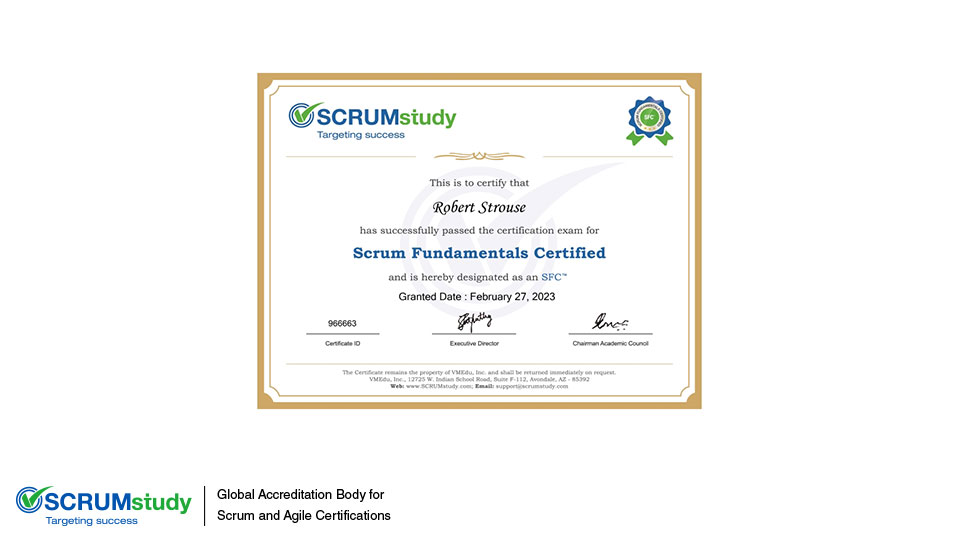
Agile Scrum certification programs provide comprehensive training and validation of skills in Scrum methodology, which is a widely adopted agile framework for managing complex projects. These programs typically cover key principles and practices, including iterative development, collaboration, and flexibility in responding to change. Certification levels range from foundational to advanced, catering to various roles such as Scrum Masters, Product Owners, and Scrum Team members. Obtaining such certifications demonstrates a professional's commitment to mastering agile practices and enhances their capability to contribute effectively to Scrum projects, promoting improved productivity, quality, and project success within their organizations
We will attempt to do a quick overview of some of the Scrum certifications that are currently being offered.
Next, let's discuss how to choose the right Scrum trainer. While it can be beneficial to find a Scrum trainer with a similar background to yours, it is not an absolute requirement. The framework and style of Scrum training can vary from trainer to trainer, so it's important to find one that matches your learning style.
The biggest positive of a formal Scrum training is that you learn everything in a controlled environment. You meet people who are also there to learn about Scrum and in case you have common background, it helps to understand the process and difficulties of implementation from outsider’s point of view. A formal training also helps you understand about the mistake which you may make due to the traditional project management concepts rooted in you.
The main purpose of any certification is to impart a common baseline of the knowledge. These Scrum certifications, compared to any other project management certifications have a very easy test. You should remember that getting a Scrum certificate is way easier than the implementing actual Scrum framework.
Scrum and Agile methodologies offer significant flexibility in implementation. However, it's crucial to maintain the core principles of the process. Project managers who modify essential elements of Scrum are often referred to as "Scrumbut." It is generally recommended to adopt Scrum in its entirety initially to fully understand its mechanics. Once you have a solid grasp of the framework, you can then make informed decisions about potential adjustments. Over time, you may realize that no changes are necessary.
You need to understand that nothing is more valuable than experience. Scrum or Agile Certification may only add some credibility and marketability to the individual.
How does a Scrum certification body ensure the excellence and integrity of Scrum certification programs?
Posted bySCRUMstudy® on February 23, 2024
Categories Agile Product Backlog Release Scrum Scrum Guide

The SBOK™ Guide, established by SCRUMstudy, embodies the pinnacle of Scrum certification excellence, offering a robust and meticulously crafted framework that underpins the SCRUMstudy certification programs. This guide not only encapsulates the core principles, practices, and methodologies of Scrum but also sets the standard for what it means to excel in the field. By providing a detailed and systematic approach to Scrum, the SBOK™ Guide ensures that certification candidates are thoroughly equipped with the knowledge and skills necessary to navigate and lead Agile projects effectively. Achieving a certification through the SBOK™ Guide signifies a professional’s commitment to excellence and mastery in Scrum, as it is recognized globally as a mark of high competency and proficiency. Thus, the SBOK™ Guide is integral to fostering a deep understanding and implementation of Scrum, driving success and innovation within organizations worldwide.
Scrum certification satisfaction typically refers to the level of contentment or fulfillment experienced by individuals who have completed Scrum certification courses and exams. High satisfaction often indicates that candidates found the certification process valuable, gained useful knowledge and skills, and felt adequately prepared to apply Scrum principles in their work environments. Positive feedback and testimonials from certified professionals contribute to overall certification satisfaction and may reflect the effectiveness of the training programs in meeting the needs and expectations of participants.
Unlike a large amount of certifications such as ITIL certification, Prince2 certification and PMP certification, which are used for successful implementation of Best Practices or procedures for ensuring perfect design or output of a product or service, Scrum training also emphasizes on the satisfaction of employees and reduction in Technical Debt.
Technical debt is considered as a difficult challenge as considered by the older techniques of project management. This is because development of a particular product or service, testing and proper documentation will be done in sequences and at various times by different persons – in short, a single person would not be responsible for any specific Working Deliverables. The output will be that technical debt gets accumulated, in the long run, that will lead to high maintenance costs, integration and costs in release of products during the last stages of a product’s release. In other words, these cost changes are very high in these types of circumstances and problems rise in final stages of the project. Scrum certification framework averts these issues that are related to technical debt. This will be done to ensure that Done deliverables with Acceptance criteria will be defined as one of the parts of Sprint Backlog that include key tasks involving development, testing and documentation. But this will be done as part of the same Sprint and will be carried out by the same Scrum certified or Team which will be responsible for the project.
Consistent pace throughout the project is considered as one of the main advantages of Scrum certification. A regular pace will lead to improvement of employee satisfaction, conducive environment and high level of accuracy in estimation. For development of a high quality product and for maintaining an environment, it is important that integration-type activities are carried out regularly than specify delays of the integration work till the last stage in similar type of circumstances. In order to deliver value at regular intervals, the Scrum certified team should constantly involve in development, testing and integration of the functionalities of every Prioritized Product Backlog Item (PBI) in each Sprint with the use of techniques, such as constant integration and automated testing of products. One of the major principles of Scrum certification projects is that it emphasizes on ensuring that the effort involved in the current Sprint should be similar to the future Sprints in order to maintain the consistency.
Agile and Scrum certification programs
Posted bySCRUMstudy® on January 16, 2024
Categories Agile Certification Scrum Training
SCRUMstudy Agile and Scrum certification programs are designed to empower professionals with the knowledge and skills essential for thriving in dynamic project environments. These globally recognized certifications, such as Scrum Master, Product Owner, and Agile Master, validate expertise in Agile practices, ensuring adeptness in iterative development, collaboration, and delivering high-value products. Each certification equips candidates with practical insights into Scrum frameworks, roles, and ceremonies, fostering efficiency, adaptability, and continuous improvement within teams. By earning a SCRUMstudy certification, professionals demonstrate their commitment to mastering Agile principles, enhancing organizational agility, and driving successful project outcomes in today's rapidly evolving business landscape.
Advancing Career Prospects
Scrum certification serves as a testament to your understanding and proficiency in Agile methodologies, making you a valuable asset to any organization adopting Agile practices. Employers actively seek certified Scrum Masters and Product Owners to lead teams and streamline processes, knowing that these individuals can drive productivity and innovation.
Gaining Practical Knowledge
Certification in Scrum involves comprehensive training that equips you with practical skills to manage projects effectively. From sprint planning and backlog grooming to daily stand-ups and retrospective meetings, certified Scrum professionals are well-versed in optimizing workflows and fostering a collaborative environment conducive to success.
Meeting Industry Standards
Employers increasingly prefer candidates with recognized certifications that validate their expertise. By becoming Scrum certified through reputable organizations like ScrumStudy, professionals align themselves with industry standards and demonstrate their commitment to continuous learning and improvement.
Networking Opportunities
Obtaining Scrum certification also opens doors to a vast network of professionals in the Agile community. Networking with peers and experts can provide insights into best practices, career advice, and potential job opportunities that may not be advertised publicly.
In conclusion, Scrum certification not only enhances your skills and knowledge but also boosts your credibility in the competitive job market. It validates your ability to adapt to dynamic project requirements and deliver results efficiently. Whether you are aiming for career advancement or exploring new opportunities, investing in Scrum certification can significantly accelerate your professional growth and open doors to exciting possibilities in Agile project management.