
Scrum training benefits
Posted bySCRUMstudy® on June 20, 2024
Categories Agile Product Backlog Release Scrum Scrum Guide
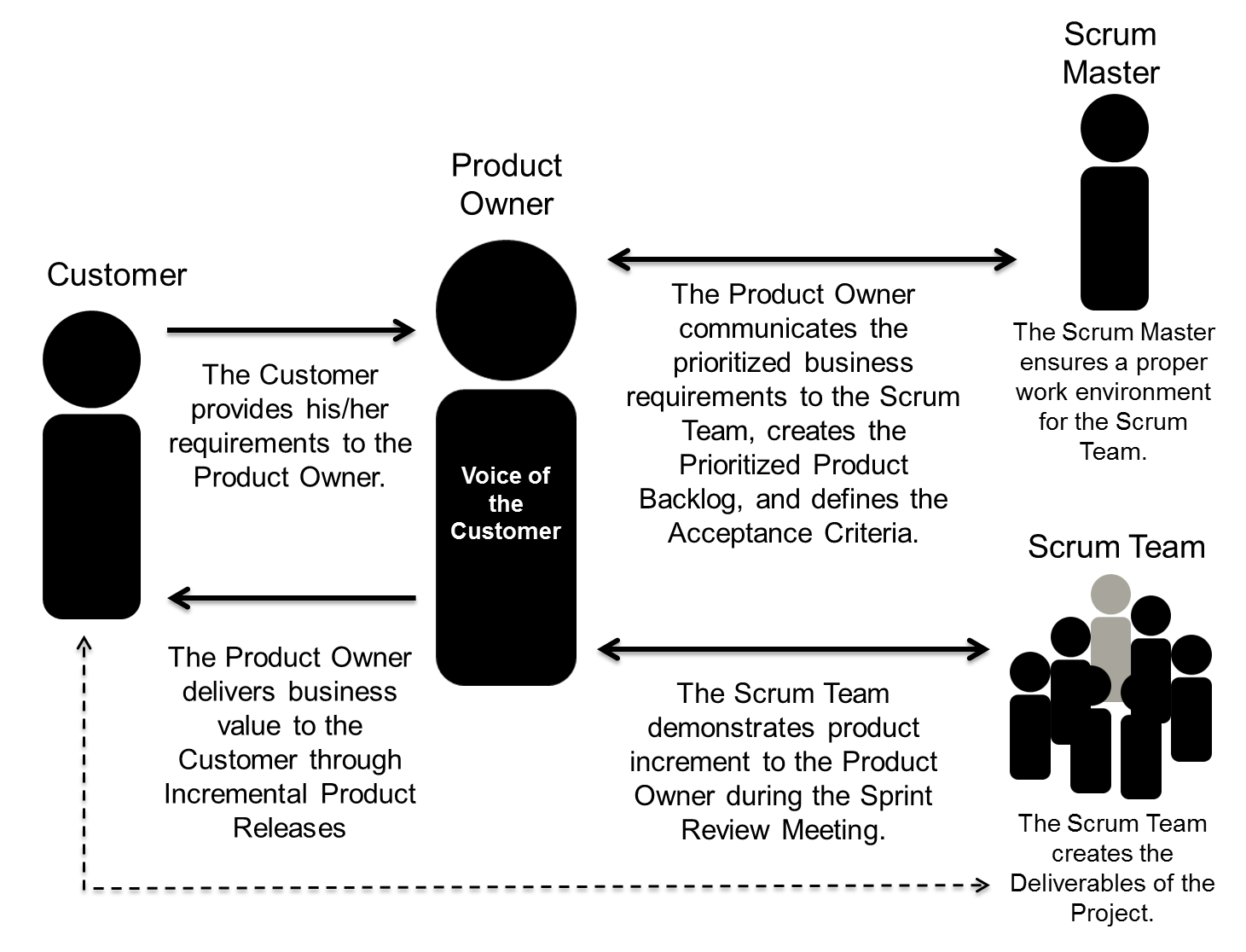
Scrum training offers numerous benefits, including a deep understanding of Agile principles and the Scrum framework, which enhances the ability to manage and deliver complex projects efficiently. Participants gain insights into effective team collaboration, iterative development, and incremental delivery. The training equips individuals with practical skills for roles such as Scrum Master and Product Owner, enabling them to facilitate better communication, improve team dynamics, and drive continuous improvement. Additionally, Scrum training can lead to certification, boosting career prospects and validating one's expertise in implementing Scrum practices to achieve higher productivity and project success.
Scrum Master certification training offers numerous benefits for professionals seeking to excel in agile project management. Scrum Master certification equips individuals with comprehensive knowledge of the Scrum framework, empowering them to lead agile teams effectively. Through training, participants gain a deep understanding of Scrum principles, roles, and responsibilities, enabling them to facilitate collaboration, remove impediments, and foster continuous improvement within their teams. Additionally, Scrum Master training provides valuable insights into agile methodologies, enhancing problem-solving skills, and promoting adaptive project management practices. Overall, Scrum Master certification opens doors to diverse career opportunities and equips individuals with the expertise needed to drive successful agile projects in today's dynamic business environment.
As with all other additional certifications which ensure success in a Project according to the business needs, Scrum also provides assurance that the end result of a product or service will always be better than the initial stages of its development. This is due to the fact that quality is emphasized as top priority in Scrum to meet the Acceptance Criteria and satisfy the business needs of the Customer.
In order to ascertain that a project will meet the requirements of quality as defined, in Scrum, the process adopted is that of continuous improvement in which the teams have the benefit of learning from experience. There will also be regular interaction with business stakeholders for keeping the Prioritized Product Backlog constantly updated with any changes in requirements. This Product Backlog will be never complete until the project is closed or terminated. Unless the requirements are changed according to the customer, then internal and external changes will have to be brought about for allowing the team to continue working and adapt according to the new developments.
As the work has to be completed as increments in the duration of Sprints as per the Scrum rule, the advantage is that errors, faults or defects can be located in the early phases by continuous tests of quality while the final result of the product/ service are on the stages of completion. Another advantage is that other valuable tasks related to quality such as testing, development and documentation will be completed in the same phase, that is, same Sprint also by same staff members. By following this method, a project can be ensured of specific quality in any release product or service as per part of a particular Sprint. The end product or deliverables from these kind of Scrum projects which can be worked on, are usually described as “Done.”
By following the principles of Scrum, continuous improvement with consistent testing of quality can increase the chances of attaining the anticipated levels ofquality in a Scrum project. Regular interaction between the business stakeholders which includes users and customers and Scrum Core team can decrease the gap regarding the expectations and actual deliverables of the product by valuable suggestions at the end of each Sprint.
Valuable suggestions and guidelines can also be obtained from Scrum Guidance Body regarding the quality which might prove useful for all the Scrumprojects in the organization. The Scrum Guidance Body usually consists of a group of experts typically involved in defining objectives that are related to government regulations, security and various organizational parameters.
Agile Scrum Training Benefits
Posted bySCRUMstudy® on June 02, 2024
Categories Agile Frameworks SBOK® Guide Scrum Training

Agile Scrum training offers numerous benefits. Firstly, it equips professionals with a deep understanding of Agile principles and the Scrum framework, enabling them to adapt quickly to changing project requirements and deliver value incrementally. Additionally, participants learn effective collaboration and communication techniques, fostering stronger teamwork and stakeholder engagement. Moreover, Agile Scrum training empowers individuals to become proficient in Agile tools and techniques, enhancing their ability to plan, execute, and monitor projects efficiently. Furthermore, it instills a culture of continuous improvement, encouraging teams to reflect on their processes and implement iterative enhancements for greater productivity and customer satisfaction.
There is a famous proverb, “If you are comfortable with yourself, you will definitely be comfortable with others.” It also means the importance of self-confidence which points to becoming a self-organized individual in one’s life. Scrum certification emphasizes on the importance of self-organization which ultimately results in the following:
- Team participation and a feeling of self-ownership in members
- Employees are self-motivated which can lead to improved performance in a team
- New environment that is preferable for growth
A self-organized team does not convey the message that any team member can act in his/her own way as per their wishes. It strongly means that as soon as the definition of Product Vision is created in the Create Project Vision process, the concerned team members, the Product Owner, Scrum Master and the members of the Scrum team become noted and identified individuals. It has to kept in mind that the core team of Scrum also works very closely with important business stakeholders for making changes and better improvements as they all pass through the Develop Epics and Create User Stories process. Every team member’s expertise is put to test while assessing the inputs that are needed to execute the planned work of the project. The judgment aspects of all the team members are applied to every technical and management of the project during the phase of Create Deliverables process.
A Product Owner’s task as per the content of Scrum certification is to prioritize as he/she represents the Voice of Customer. The tasks of the self-organized Scrum team are to involve in break-down of tasks and estimation during the Create tasks and Estimate Tasks processes. Every team member should be aware of the work they are doing or handling as they are responsible for the tasks getting completed. One of the greatest advantages of Scrum certification or Scrum training is that in the execution of Sprint, if any of the team members require help for finishing the assigned tasks, it is addressed through the regular interaction that is mandatory during the Daily Standup Meetings. The members of the Scrum Team regularly interact with other teams via the Scrum of Scrums (SoS) Meetings and they can look for additional guidance when needed from the Scrum Guidance Body.
Since meetings are held regularly with customers and business stakeholders, each sprint will incorporate the necessary changes and improvements. By the end, the Scrum Teams will have designed a product or service that meets the clients' acceptance criteria.