
Scrum Product Management In Agile
Posted bySCRUMstudy® on July 09, 2024
Categories Agile Product Owner Scrum Scrum Master Training
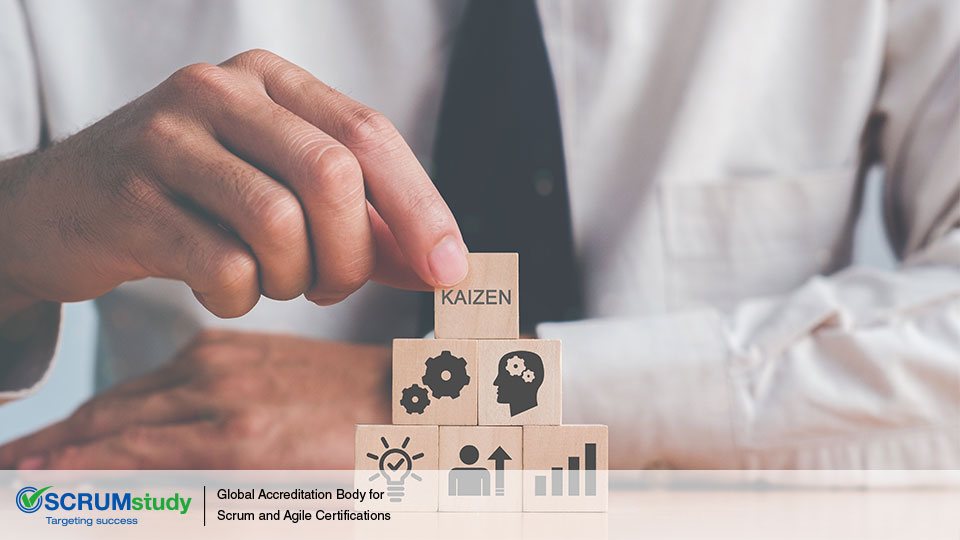
In the realm of product management, continuous improvement is vital for success. This article delves into how Agile Retrospectives and Kaizen practices can revolutionize product development. By fostering a culture of ongoing enhancement and collaboration, these methodologies empower teams to refine processes, boost efficiency, and ultimately deliver superior products. Discover how integrating these principles can transform your product management approach and drive sustainable growth.
A gathering conducted toward the close of an iteration pertaining to Agile software development is known as an Agile retrospective. The team turns back and mentally goes through the different events that occurred during the iteration and then tries to contemplate the improvement steps to go ahead.
The following questions are being asked of each team member:
• What were the good things that worked fine for the team?
• What were the unfortunate things that didn’t go well for the team?
• What feasible options and steps can be taken to improve the team process in the future?
The Agile retrospective is similar to that of the review meetings conducted to learn the do’s and avoid the pitfalls. Lessons are learned from real past experience and the team focuses on the necessary changes needed for the subsequent iteration. This meeting of team members is powered by themselves as they are the ones who decide the ‘how’ part of running the meetings and improvement decisions.
A cordial and transparent atmosphere based on the foundation of trust is very much needed for team members to share their ideas and inputs in a relaxed manner. Primary importance is being given to continuous improvement in Agile development; hence conducting these Agile retrospective meetings should be ingrained among all members of the team as one of the most significant development practices of Agile.