
What are the main topics and practical skills covered in a Scrum Certification Bootcamp, and how does it prepare participants for the certification exams?
Posted bySCRUMstudy® on July 31, 2024
Categories Agile Certification Scrum Scrum Guide Scrum Principles Training
The Scrum Certification Bootcamp is an intensive training program designed to immerse participants in the principles and practices of Scrum methodology. This bootcamp provides comprehensive, hands-on learning experiences, combining theoretical knowledge with practical application through exercises, simulations, and real-world scenarios. Participants gain a deep understanding of Scrum roles, artifacts, and ceremonies, and learn how to effectively implement Scrum in their projects. By the end of the bootcamp, attendees are well-prepared to take Scrum certification exams, such as Scrum Master Certified (SMC) or Scrum Product Owner Certified (SPOC), enhancing their professional credentials and boosting their careers in agile project management.
The SCRUMstudy Trainer Bootcamp is an intensive and comprehensive program designed for professionals aiming to become certified SCRUMstudy trainers.This bootcamp equips participants with in-depth knowledge of Scrum methodologies and effective teaching strategies. The curriculum includes rigorous training sessions on the Scrum framework, Agile project management, and real-world application scenarios, ensuring that prospective trainers are well-prepared to deliver high-quality Scrum training. Participants engage in hands-on activities, collaborative learning, and assessments that hone their skills in facilitating Scrum processes and coaching teams towards achieving excellence in Agile practices. By the end of the bootcamp, attendees not only gain the SCRUMstudy Trainer certification but also the confidence and competence to lead Scrum training sessions effectively, fostering a culture of continuous improvement and innovation in organizations.
SCRUM training for several certification exams (including SMC®, SPOC®, SAMC™, and ESMC™) should preferably be conducted in classrooms or through virtual instructor-led sessions. It is important for every SCRUMstudy™ faculty to be an expert in the particular SCRUMstudy™ certification he or she is teaching, and be very familiar with the concepts in the SBOK® Guide. It is also important for the faculty to be a good teacher have adequate soft skills to handle different situations in a class, and consistently deliver very high-quality training.
Process for becoming an accredited SCRUMstudy™ Certified Trainer (SCT®):
-
Trainers need to have at least 2 years of relevant work experience and should be willing to share their experiences in the classes they teach.
-
They need to successfully pass any three SCRUMstudy™ certification exams (out of SDC®, SMC®, SAMC™, and SPOC®), including the certification course that they wish to teach.
-
They need to be aware of the training resources available on the SCRUMstudy™ A.T.P. site (including videos, handbooks, recordings of past training sessions, etc). SCRUMstudy™ will provide substantial training resources that A.T.P.s and Trainers can customize and use for their classes - the training resources will focus more on SCRUM concepts rather than on how to pass SCRUMstudy™ certification exams. Other than the training resources available in SCRUMstudy™, additional custom content may need to be developed by individual A.T.P.s or Trainers.
-
All Trainers should be associated with a SCRUMstudy™ A.T.P.
Once trainers complete the above requirements, they need to apply to SCRUMstudy™ to become an accredited trainer (mentioning the details of the A.T.P. with whom they are associated). Accredited Trainers will be certified as "SCRUMstudy™ Certified Trainers (SCT®s)" - and they will be awarded an accreditation certificate making them eligible to train students for SCRUMstudy™ certifications. They should train only for the A.T.P.s with whom they have got associated.
To ensure a high-quality learning experience for all our students, trainers need to consistently get high rankings in student feedback forms. SCRUMstudy™ will regularly ask for feedback from students who attend classes conducted by SCRUMstudy™ A.T.P.s Faculty who receive unfavorable feedback must work on improving their course delivery, or their accreditation as SCT®s may be terminated. SCRUMstudy™ reserves its right to terminate any SCT® from continuing training for SCRUMstudy™ classes because of poor feedback or for other reasons.
What are the advantages of attending a Scrum Certification Bootcamp?
Posted bySCRUMstudy® on July 22, 2024
Categories Agile Certification Scrum Scrum Guide Scrum Principles Training

The Scrum Certification Bootcamp is an intensive training program designed to immerse participants in the principles and practices of Scrum methodology. This bootcamp provides comprehensive, hands-on learning experiences, combining theoretical knowledge with practical application through exercises, simulations, and real-world scenarios. Participants gain a deep understanding of Scrum roles, artifacts, and ceremonies, and learn how to effectively implement Scrum in their projects. By the end of the bootcamp, attendees are well-prepared to take Scrum certification exams, such as Scrum Master Certified (SMC) or Scrum Product Owner Certified (SPOC), enhancing their professional credentials and boosting their careers in agile project management.
The SCRUMstudy Trainer Bootcamp is an intensive and comprehensive program designed for professionals aiming to become certified SCRUMstudy trainers.This bootcamp equips participants with in-depth knowledge of Scrum methodologies and effective teaching strategies. The curriculum includes rigorous training sessions on the Scrum framework, Agile project management, and real-world application scenarios, ensuring that prospective trainers are well-prepared to deliver high-quality Scrum training. Participants engage in hands-on activities, collaborative learning, and assessments that hone their skills in facilitating Scrum processes and coaching teams towards achieving excellence in Agile practices. By the end of the bootcamp, attendees not only gain the SCRUMstudy Trainer certification but also the confidence and competence to lead Scrum training sessions effectively, fostering a culture of continuous improvement and innovation in organizations.
SCRUM training for several certification exams (including SMC®, SPOC®, SAMC™, and ESMC™) should preferably be conducted in classrooms or through virtual instructor-led sessions. It is important for every SCRUMstudy™ faculty to be an expert in the particular SCRUMstudy™ certification he or she is teaching, and be very familiar with the concepts in the SBOK® Guide. It is also important for the faculty to be a good teacher have adequate soft skills to handle different situations in a class, and consistently deliver very high-quality training.
Process for becoming an accredited SCRUMstudy™ Certified Trainer (SCT®):
-
Trainers need to have at least 2 years of relevant work experience and should be willing to share their experiences in the classes they teach.
-
They need to successfully pass any three SCRUMstudy™ certification exams (out of SDC®, SMC®, SAMC™, and SPOC®), including the certification course that they wish to teach.
-
They need to be aware of the training resources available on the SCRUMstudy™ A.T.P. site (including videos, handbooks, recordings of past training sessions, etc). SCRUMstudy™ will provide substantial training resources that A.T.P.s and Trainers can customize and use for their classes - the training resources will focus more on SCRUM concepts rather than on how to pass SCRUMstudy™ certification exams. Other than the training resources available in SCRUMstudy™, additional custom content may need to be developed by individual A.T.P.s or Trainers.
-
All Trainers should be associated with a SCRUMstudy™ A.T.P.
Once trainers complete the above requirements, they need to apply to SCRUMstudy™ to become an accredited trainer (mentioning the details of the A.T.P. with whom they are associated). Accredited Trainers will be certified as "SCRUMstudy™ Certified Trainers (SCT®s)" - and they will be awarded an accreditation certificate making them eligible to train students for SCRUMstudy™ certifications. They should train only for the A.T.P.s with whom they have got associated.
To ensure a high-quality learning experience for all our students, trainers need to consistently get high rankings in student feedback forms. SCRUMstudy™ will regularly ask for feedback from students who attend classes conducted by SCRUMstudy™ A.T.P.s Faculty who receive unfavorable feedback must work on improving their course delivery, or their accreditation as SCT®s may be terminated. SCRUMstudy™ reserves its right to terminate any SCT® from continuing training for SCRUMstudy™ classes because of poor feedback or for other reasons.
Agile and Scrum certification bootcamp
Posted bySCRUMstudy® on June 26, 2024
Categories Agile Scaling Scrum Scrum Scrum Master

An Agile and Scrum certification bootcamp is an intensive and immersive training program designed to accelerate learning and certification attainment. Typically spanning a few days to a week, these bootcamps provide comprehensive coverage of Agile principles and Scrum practices through hands-on workshops, simulations, and interactive sessions. Participants engage in real-world case studies and practical exercises that mirror agile project environments, preparing them for certification exams such as Scrum Master Certified (SMC) . Led by experienced instructors, these bootcamps offer a focused and efficient way for professionals to deepen their understanding of Agile methodologies and acquire valuable certification credentials.
The Agile Master Bootcamp offers an intensive and immersive training experience designed to elevate participants' mastery of Agile practices. This comprehensive bootcamp delves into the core aspects of the Scrum framework, providing a deep understanding of roles, ceremonies, and artifacts essential for effective Agile project management. Participants engage in hands-on exercises, real-world simulations, and collaborative learning sessions that reinforce the practical application of Agile principles. By aligning with the SBOK™ Guide, the bootcamp ensures that attendees are well-versed in the latest best practices and tools needed to drive Agile transformations within their organizations. The program's rigorous curriculum is crafted to prepare professionals for advanced Scrum roles, such as Scrum Master and Product Owner, equipping them with the skills to lead teams, facilitate continuous improvement, and deliver high-value outcomes. Graduates of the Agile Master Bootcamp emerge as proficient Agile practitioners, ready to apply their knowledge and expertise to foster innovation and agility in their projects and organizations.
The Agile Master Methodology, embodies a holistic approach to Agile project management, encompassing a range of methodologies such as Scrum, Kanban, Lean, and Extreme Programming (XP). This methodology emphasizes adaptability, collaboration, and iterative development to deliver value to stakeholders efficiently. Agile Masters are trained to lead teams through the complexities of modern projects by leveraging Agile principles and practices. They facilitate Agile ceremonies, foster self-organizing teams, and promote continuous improvement. With a focus on customer satisfaction and responsiveness to change, the Agile Master Methodology equips professionals with the tools and mindset needed to navigate dynamic environments and deliver successful outcomes.
Scrum Master is responsible for ensuring that the Scrum framework is correctly understood and enacted within the team. This involves coaching team members, removing impediments to progress, and fostering an environment conducive to high performance and continuous improvement. By adhering to the principles and practices detailed in the SBOK Guide, a Certified Scrum Master helps the team maintain focus on delivering value incrementally, enhancing collaboration, and adapting swiftly to changes. Their expertise not only guides the team in executing Scrum processes efficiently but also aligns the project with broader organizational goals and customer needs.The role of a Chief Scrum Master is necessary to ensure proper collaboration among the Scrum Teams. Coordination across various Scrum Teams working on a project is typically done through the Scrum of Scrums (SoS) Meeting. There is no role hierarchy of Scrum Masters—they are all peers. The Chief Scrum Master works at a multi-team level, whereas the Scrum Masters each work at a single-team level.
Chief Scrum Master and Large projects
Large projects require multiple Scrum Teams to work in parallel. Information gathered from one team may need to be appropriately communicated to other teams—the Chief Scrum Master is responsible for this activity. Coordination across various Scrum Teams working on a project is typically done through the Scrum of Scrums (SoS) Meeting. This is analogous to the Daily Standup Meeting and is facilitated by the Chief Scrum Master.
The Chief Scrum Master is typically the individual responsible for addressing impediments that impact more than one Scrum Team. Typically, any inter-team issues are addressed by the interested parties in a session immediately following the Scrum of Scrums Meeting. The Chief Scrum Master facilitates this session.
How Chief Scrum Master is chosen?
The Chief Scrum Master can be chosen from the Scrum Masters of the large project or can be somebody else. For very large projects, it is recommended to have a Chief Scrum Master who is not also a Scrum Master because the effort required for the Chief Scrum Master role will prevent the Chief Scrum Master from also being able to dedicate enough time to the work with his/her Scrum Team. In either case, the Chief Scrum Master should have enough Scrum expertise to be able to foster collaboration and to help and coach others with the implementation of Scrum for a smooth delivery of the project’s products.
Other roles of the Chief Scrum Master
Apart from clearing impediments and ensuring a conducive project environment for the Scrum Teams, the Chief Scrum Master also collaborates with the Chief Product Owner, other Scrum Masters, and Product Owners in activities such as developing the list of components and resources needed in common for all teams throughout the project. He/she facilitates everything that goes beyond the realm of a single Scrum Team.
The Chief Scrum Master also interfaces with the Program Scrum Master to ensure alignment of the large project with the goals and objectives of the program.
Agile Scrum certification bootcamps
Posted bySCRUMstudy® on June 24, 2024
Categories Agile Certification Scrum Training
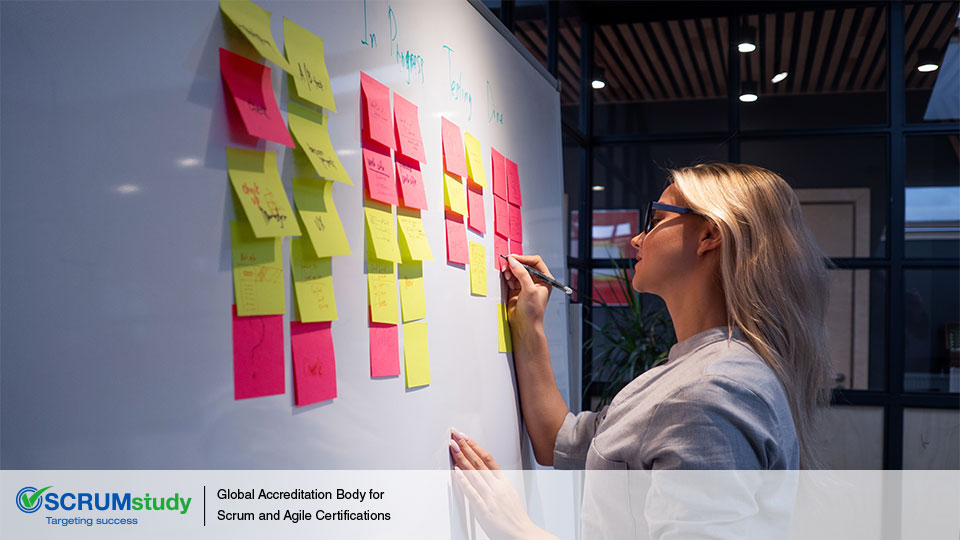
Agile Scrum certification bootcamps offer intensive training programs designed to equip professionals with the essential skills and knowledge required to effectively implement Agile methodologies using Scrum frameworks. These bootcamps typically feature hands-on learning experiences, interactive workshops, and real-world case studies to immerse participants in the principles of Agile project management.
An Agile certification bootcamp offers an intensive and immersive learning experience designed to fast-track participants' understanding and application of Agile methodologies. These bootcamps typically span several days and focus on practical skills through hands-on activities, simulations, and real-world case studies. Led by seasoned Agile practitioners and trainers, bootcamps provide a dynamic environment for participants to learn Agile principles such as iterative development, collaboration, and continuous improvement. By completing an Agile certification bootcamp, professionals gain the knowledge and confidence to implement Agile practices effectively within their teams and organizations. This intensive training often culminates in earning certification on Scrum Master Certified (SMC), validating their proficiency and readiness to lead Agile initiatives.
The Scaled Scrum Bootcamp is an intensive training program designed to equip participants with the knowledge and skills needed to effectively implement Scaled Scrum frameworks in large organizations. This bootcamp goes beyond traditional Scrum methodologies by addressing the complexities of scaling Agile practices across multiple teams and departments. Participants learn how to coordinate efforts, manage dependencies, and maintain alignment while fostering a culture of collaboration and continuous improvement. Through hands-on exercises, case studies, and interactive sessions, attendees gain practical insights into adapting Scrum principles at scale, making the Scaled Scrum Bootcamp a valuable experience for Agile practitioners aiming to enhance their organizational agility.
The Scaled Scrum Certification Path offers a structured journey for professionals seeking to master the intricacies of scaling Scrum within large organizations. Drawing from the SBOK Guide, this path equips individuals with the knowledge and skills needed to effectively apply Scrum principles in complex environments. Beginning with foundational certifications such as Scrum Fundamentals Certified (SFC™), practitioners gain a solid understanding of Scrum fundamentals before progressing to advanced levels like Scaled Scrum Master Certified (SSMC™) and Scaled Scrum Product Owner Certified (SSPOC™). These certifications delve deeper into the nuances of scaling Scrum, addressing topics such as enterprise agility, organizational change management, and stakeholder collaboration. As individuals advance along this certification path, they become adept at orchestrating large-scale Scrum initiatives, driving innovation, and delivering exceptional value to stakeholders in today’s dynamic business landscape.
The Scaled Scrum Master Certification (SSMC™) Online, is designed for Scrum professionals who aim to extend their expertise in scaling Scrum across multiple teams and complex projects. This certification equips practitioners with advanced skills to coordinate, manage, and implement Scrum processes effectively at an enterprise level. The SSMC™ curriculum covers essential topics such as managing distributed teams, synchronizing multiple Scrum teams, and handling intricate project dynamics, ensuring that participants can drive agile transformation and deliver substantial business value in large-scale environments. The Scaled Scrum Master Bootcamp offered by SCRUMstudy and its ATPs is an intensive training program designed to equip participants with the advanced skills and knowledge required to effectively manage and lead Scrum teams in a scaled Agile environment.
Scrum Certification Professional Development focuses on enhancing skills and knowledge in Scrum, a popular Agile framework for managing complex projects. It involves earning certifications most popular being Scrum Master Certified (SMC) and Scrum Product Owner Certified (SPOC). These certifications validate one's expertise in Scrum principles, practices, and methodologies. Professional development in this field includes attending workshops, participating in training courses, engaging in practical Scrum projects, and continuous learning through reading and community involvement. It aims to improve one's ability to facilitate, implement, and optimize Scrum processes, leading to more efficient project delivery and higher quality outcomes.
It is often seen that Agile has been implemented successfully in different projects. But when it comes to Product Management or NPD (New Product Development), many people get sceptical regarding implementation of Agile. Now it has to be understood that Agile is not a methodology which can be used in a cookie cutter way across any organization. A lot of tweaking and customization is required to make it work. So, in product management, a proper assessment is required to see if Agile implementation will improve performance or not.
Here also, we need to see if the following two criteria are being fulfilled or not:
- Requirement Volatility : It is important to identify the volatility of requirements and whether working in Sprint will actually improve customer satisfaction, reduce uncertainty and help PM teams become more productive or not. If requirements are fixed in sand and are not dynamic in nature, it will not make any marked improvement even if the teams work in sprint. Also, Agile Product Life Cycle Management involves a lot of new learning, so it needs to be checked if the team will be comfortable in this transition or not.
- Frequent customer Interaction: External customers are big stakeholders in any Agile effort. In many product management scenarios, we have seen that customers just give their specifications and just go away for months and months. And finally when they come back for the product, it is completely different from what they expected, because market dynamics change and the expectations change as well. So the biggest benefit is actually to the customers themselves, and this is what the PM team should explain in details to the customers so as to get their buy in. Without their pro-active support, it will not be possible to implement Agile in any way.
If we are talking about New Product Development, then Agile actually becomes even more crucial and important. That is because neither the customers nor the PM team has any benchmark to follow. So, frequent discussions and brain storming sessions followed by change in requirements or prototypes will be mandatory for successful NPD. So, it is important to realize that Agile can be implemented successfully in Product Management as well, provided it is understood properly and used in the proper context. Also, management buy-in and customer buy-in are important components in this scenario, and a good AGILE coach will also be very beneficial.
Scrum Certification Bootcamp
Posted bySCRUMstudy® on June 11, 2024
Categories Agile Certification Scrum Scrum Guide Scrum Principles Training
The Scrum Certification Bootcamp is an intensive training program designed to immerse participants in the principles and practices of Scrum methodology. This bootcamp provides comprehensive, hands-on learning experiences, combining theoretical knowledge with practical application through exercises, simulations, and real-world scenarios. Participants gain a deep understanding of Scrum roles, artifacts, and ceremonies, and learn how to effectively implement Scrum in their projects. By the end of the bootcamp, attendees are well-prepared to take Scrum certification exams, such as Scrum Master Certified (SMC) or Scrum Product Owner Certified (SPOC), enhancing their professional credentials and boosting their careers in agile project management.
The SCRUMstudy Trainer Bootcamp is an intensive and comprehensive program designed for professionals aiming to become certified SCRUMstudy trainers.This bootcamp equips participants with in-depth knowledge of Scrum methodologies and effective teaching strategies. The curriculum includes rigorous training sessions on the Scrum framework, Agile project management, and real-world application scenarios, ensuring that prospective trainers are well-prepared to deliver high-quality Scrum training. Participants engage in hands-on activities, collaborative learning, and assessments that hone their skills in facilitating Scrum processes and coaching teams towards achieving excellence in Agile practices. By the end of the bootcamp, attendees not only gain the SCRUMstudy Trainer certification but also the confidence and competence to lead Scrum training sessions effectively, fostering a culture of continuous improvement and innovation in organizations.
SCRUM training for several certification exams (including SMC®, SPOC®, SAMC™, and ESMC™) should preferably be conducted in classrooms or through virtual instructor-led sessions. It is important for every SCRUMstudy™ faculty to be an expert in the particular SCRUMstudy™ certification he or she is teaching, and be very familiar with the concepts in the SBOK® Guide. It is also important for the faculty to be a good teacher have adequate soft skills to handle different situations in a class, and consistently deliver very high-quality training.
Process for becoming an accredited SCRUMstudy™ Certified Trainer (SCT®):
-
Trainers need to have at least 2 years of relevant work experience and should be willing to share their experiences in the classes they teach.
-
They need to successfully pass any three SCRUMstudy™ certification exams (out of SDC®, SMC®, SAMC™, and SPOC®), including the certification course that they wish to teach.
-
They need to be aware of the training resources available on the SCRUMstudy™ A.T.P. site (including videos, handbooks, recordings of past training sessions, etc). SCRUMstudy™ will provide substantial training resources that A.T.P.s and Trainers can customize and use for their classes - the training resources will focus more on SCRUM concepts rather than on how to pass SCRUMstudy™ certification exams. Other than the training resources available in SCRUMstudy™, additional custom content may need to be developed by individual A.T.P.s or Trainers.
-
All Trainers should be associated with a SCRUMstudy™ A.T.P.
Once trainers complete the above requirements, they need to apply to SCRUMstudy™ to become an accredited trainer (mentioning the details of the A.T.P. with whom they are associated). Accredited Trainers will be certified as "SCRUMstudy™ Certified Trainers (SCT®s)" - and they will be awarded an accreditation certificate making them eligible to train students for SCRUMstudy™ certifications. They should train only for the A.T.P.s with whom they have got associated.
To ensure a high-quality learning experience for all our students, trainers need to consistently get high rankings in student feedback forms. SCRUMstudy™ will regularly ask for feedback from students who attend classes conducted by SCRUMstudy™ A.T.P.s Faculty who receive unfavorable feedback must work on improving their course delivery, or their accreditation as SCT®s may be terminated. SCRUMstudy™ reserves its right to terminate any SCT® from continuing training for SCRUMstudy™ classes because of poor feedback or for other reasons.