
What are the core topics covered in Certified Scrum Master training, and how do they prepare participants for real-world Agile challenges?
Posted bySCRUMstudy® on August 12, 2024
Categories Agile Agile Frameworks Continuous Deployment Product Development Scrum Scrum Processes
Scrum Master Certified (SMC) Training is an intensive, interactive course designed to teach the fundamentals of Scrum and prepare participants for the SMC exam. Led by a Scrum Trainer Certified (SCT), the training typically spans two days and covers key aspects of Scrum, including roles, events, artifacts, and Agile principles. Through engaging activities, real-world scenarios, and group discussions, attendees learn how to facilitate Scrum teams, manage product backlogs, and foster a culture of continuous improvement. Successfully completing the training enables participants to take the SMC exam, earning a certification that demonstrates their expertise in Scrum and ability to lead Agile projects.
Scrum Master Certified training equips individuals with the essential skills and knowledge to effectively fulfill the role of a Scrum Master in agile development teams. This training typically covers the principles and practices of Scrum framework, including Scrum roles, events, artifacts, and the importance of empirical process control. Participants learn how to facilitate Scrum ceremonies, foster collaboration within teams, and remove impediments to ensure smooth project progression. With a focus on servant leadership, communication, and continuous improvement, Scrum Master Certified training prepares professionals to lead agile teams towards delivering high-quality products efficiently and adaptively in today's dynamic business environment.
The Scrum Master Certified (SMC™) session by SCRUMstudy is a comprehensive training program designed to equip professionals with the knowledge and skills needed to excel in the role of a Scrum Master. Participants learn about the core principles of Scrum, including empirical process control, self-organization, and continuous improvement. Through interactive sessions, case studies, and real-world examples, attendees gain practical insights into facilitating Scrum ceremonies, removing impediments, and fostering a collaborative team environment. The SMC™ session also covers essential topics such as servant leadership, stakeholder engagement, and Agile adoption strategies. By completing this training, participants not only enhance their understanding of Scrum principles but also gain the confidence to guide their teams towards delivering high-quality products efficiently and effectively.
A Scrum Certification Mock Test, as highlighted in the Scrum Body of Knowledge (SBOK Guide), serves as an invaluable tool for individuals preparing for their Scrum certification exams. These mock tests simulate the actual certification examination environment, allowing candidates to familiarize themselves with the format, types of questions, and time constraints they will face. By taking these practice tests, aspirants can assess their understanding of Scrum principles, practices, and terminology, identify areas where they need further study, and improve their test-taking strategies. The feedback from mock tests helps in pinpointing specific knowledge gaps and reinforcing the concepts learned from the SBOK Guide. Ultimately, engaging in these mock tests boosts confidence and readiness, significantly increasing the likelihood of passing the certification exam and becoming a certified Scrum professional.
Coding and testing stages are not isolated ones but well integrated ones in Agile development. The development toward every user story commences through written business-interfacing experiments that enables the team the ‘what part’ regarding coding and also the juncture when the tasks are being completed with.
Professionals in the field of testing, analysis and development interface with stakeholders from the business side for extracting instances of preferred and unwanted manners for every single user story and aspect, and then transforming them into tests which are executable. This is known as Acceptance Test-Driven Development (ATDD) or Specification by Example. The team which is responsible for development will then work in partnership with their customers to choose the specific user story aligning customer expectations apropos the delivery part. User stories will be corroborated upon cracking the different functional, automated functional and manual probing tests.
Time is an important element which should be made inclusive for the whole activities related with testing toward user story estimates. This can include automated testing and manual probing testing. Inexperienced Scrum teams frequently and habitually over promise or goes overboard with their commitment part in terms of extra work planning compared to what they could feasibly do. Testing then gets hard-pressed in the end in the absence of features, due to this undesirable characteristic of the team simply because of the arrival of sprint on the last day. The result – mass demise of user stories hauled from one iteration to the subsequent one without the testing professionals being able to conduct their tests.
Focusing on completing each story at a specified time is a good way to handle this problem.
Necessary role inclusion for comprehending the various customer requirements and delivering good quality oriented software is a benefit that Agile teams possess inherently. Agile teams find the much needed opportunity through their varied experiences and assortment of abilities which help them in traversing different approaches toward supporting business participants in outlining their requirements. They are able to do it through tangible examples provided to the business stakeholders and then interpreting the same into experiments certifying the ‘done part’ aimed at every user story along with their features.
Customers are pleased with the outcome pertaining to as an effort of the team – interacting and coordinating with the business teams, taking out the much needed time to plan for evidencing the aspects are done with as per requirements outlined. Newer Agile teams must pool in time to search for different means to comprehend the requisites of customers so that they can interpret those requisites into well conducted experiments which will outline software development. That will bring in maturity in terms of experience and doing things in a speedy manner efficiently and effectively.
Why should you consider Certified Scrum Master training programs?
Posted bySCRUMstudy® on July 22, 2024
Categories Agile Certification SBOK® Guide Scrum Scrum Guide Scrum Master Training
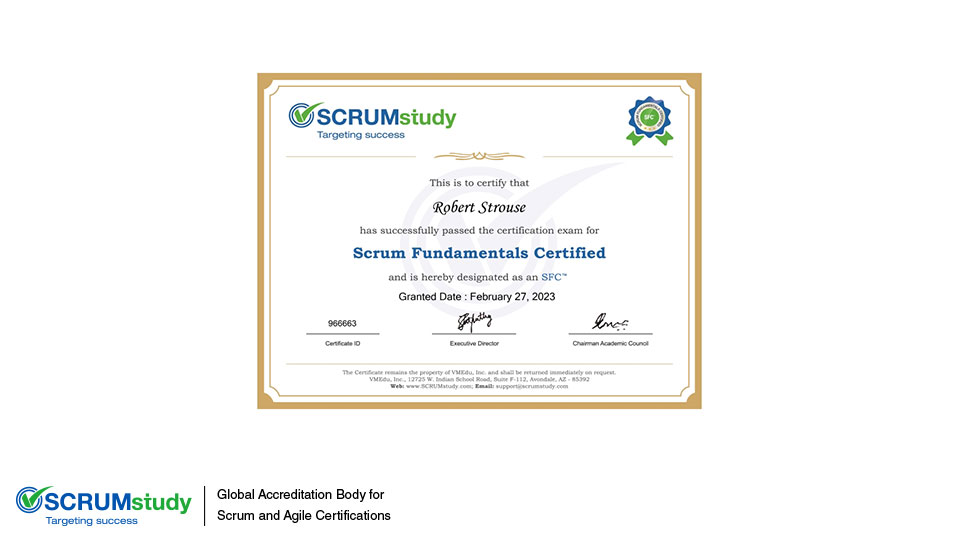
In today's dynamic project management landscape, the role of a Scrum Master is pivotal to ensuring the success of Agile teams. The Scrum Master is not only a facilitator but also a coach, mentor, and leader, guiding the team towards effective Scrum practices. To excel in this multifaceted role, hands-on training is essential, and SCRUMstudy through its network of approved Authorized Training Partners offers comprehensive Scrum Master training programs that blend theoretical knowledge with practical experience.
These programs go beyond traditional lectures, incorporating interactive activities, real-world scenarios, and collaborative exercises. Participants engage in role-playing, simulations, and group discussions, allowing them to apply Scrum principles in a controlled, risk-free setting. This experiential approach ensures that learners can translate classroom knowledge into actionable skills in their professional environments.
One of the key benefits of Scrum Master Training Programs is the emphasis on real-life problem-solving. Trainees are presented with common challenges faced by Scrum teams and are encouraged to develop practical solutions. This method not only deepens their understanding of Scrum frameworks but also enhances their ability to think critically and adapt to changing project dynamics. By the end of the course, participants are well-equipped to handle the complexities of Scrum implementation and drive their teams toward continuous improvement.
SCRUMstudy's training programs for Scrum Masters offer a holistic learning experience that blends theory with practice. By participating in these classes, aspiring Scrum Masters can develop the confidence and competence needed to lead their teams successfully, foster a collaborative work environment, and ensure the successful delivery of high-quality projects.
Certified Scrum Master Training Online
Posted bySCRUMstudy® on June 20, 2024
Categories Certification SBOK® Guide Scrum Training

Certified Scrum Master (SMC) training online offers a convenient and flexible way for professionals to delve into Agile methodologies and Scrum practices. Through interactive modules and virtual classrooms, participants learn essential skills like facilitating Scrum ceremonies, managing Agile teams, and fostering collaboration. The course equips learners with the knowledge to navigate complex project environments, enhance team productivity, and drive successful project outcomes. With experienced instructors guiding discussions and providing real-world examples, SMC training online not only prepares individuals for certification but also empowers them to champion Agile principles within their organizations. It's an ideal pathway for anyone seeking to advance their career in project management or Agile development.
SCRUMstudy Certification offers numerous benefits which includes enhanced knowledge of Agile principles and Scrum practices, improved team collaboration, and increased career opportunities. It validates expertise in Scrum, boosting credibility with employers. Certified professionals are better equipped to manage projects efficiently, ensuring high-quality product delivery and fostering continuous improvement within teams.
Scrum Master Certification offers numerous benefits for professionals in the field of project management and agile methodologies. Firstly, it provides formal recognition of one’s expertise and knowledge in Scrum practices, enhancing credibility and career prospects. Scrum Master Certified (SMC) professionlas are equipped with the skills to effectively lead Scrum teams, improve team collaboration, and facilitate project success by ensuring the proper implementation of Scrum principles. The certification also opens up opportunities for higher-paying roles and positions in reputable organizations. Additionally, SMCs often experience personal growth through the development of leadership and coaching abilities, and they become valuable assets to any agile team, driving efficiency, productivity, and continuous improvement.
Earning a Scrum certification, as emphasized in the Scrum Body of Knowledge (SBOK Guide), offers a myriad of benefits for both individuals and organizations. For individuals, it validates their expertise in Scrum practices, boosting their credibility and career prospects in the agile project management domain. Certified professionals gain a deep understanding of Scrum principles and the ability to implement them effectively, leading to improved team collaboration and project outcomes. For organizations, having certified Scrum practitioners ensures a consistent and high-quality application of Scrum processes, enhancing project efficiency and success rates. Additionally, certified teams are better equipped to handle complex projects, adapt to changing requirements, and deliver value incrementally. Overall, Scrum certification fosters a culture of continuous improvement, innovation, and alignment with industry best practices, driving both personal and organizational growth.
Although there are many certifications such as ITIL, PRINCE2, which are implemented in organizations for achievement of goals through a project, Scrum training or Scrum certification can be described as one of the many courses where employees are groomed to become self-motivated and become keen to accept greater responsibility.
There is a famous proverb, “If you are comfortable with yourself, you will definitely be comfortable with others.” It also means the importance of self-confidence which points to becoming a self-organized individual in one’s life. Scrum certification emphasizes on the importance of self-organization which ultimately results in the following:
- Team participation and a feeling of self-ownership in members
- Employees are self-motivated which can lead to improved performance in a team
- New environment that is preferable for growth
A self-organized team does not convey the message that any team member can act in his/her own way as per their wishes. It strongly means that as soon as the definition of Product Vision is created in the Create Project Vision process, the concerned team members, the Product Owner, Scrum Master and the members of the Scrum team become noted and identified individuals. It has to kept in mind that the core team of Scrum also works very closely with important business stakeholders for making changes and better improvements as they all pass through the Develop Epics and Create User Stories process. Every team member’s expertise is put to the test while assessing the inputs that are needed to execute the planned work of the project. The judgment aspects of all the team members are applied to every technical and management of the project during the phase of Create Deliverables process.
A Product Owner’s task as per the content of Scrum certification is to prioritize as he/she represents the Voice of Customer. The tasks of the self-organized Scrum team are to involve in break-down of tasks and estimation during the Create tasks and Estimate Tasks processes. Every team member should be aware of the work they are doing or handling as they are responsible for the tasks getting completed. One of the greatest advantages of Scrum certification or Scrum training is that in the execution of Sprint, if any of the team members require help for finishing the assigned tasks, it is addressed through the regular interaction that is mandatory during the Daily Standup Meetings. The members of the Scrum Team regularly interact with other teams via the Scrum of Scrums (SoS) Meetings and they can look for additional guidance when needed from the Scrum Guidance Body.
Since meetings are held regularly with customers and business stakeholders, every sprint will bear the required changes and improvements needed and at last, the Scrum Teams would have designed the product or service as accepted by the clients.
Certified Scrum Master Training
Posted bySCRUMstudy® on June 18, 2024
Categories Agile Agile Frameworks Continuous Deployment Product Development Scrum Scrum Processes
Scrum Master Certified (SMC) Training is an intensive, interactive course designed to teach the fundamentals of Scrum and prepare participants for the SMC exam. Led by a Scrum Trainer Certified (SCT), the training typically spans two days and covers key aspects of Scrum, including roles, events, artifacts, and Agile principles. Through engaging activities, real-world scenarios, and group discussions, attendees learn how to facilitate Scrum teams, manage product backlogs, and foster a culture of continuous improvement. Successfully completing the training enables participants to take the SMC exam, earning a certification that demonstrates their expertise in Scrum and ability to lead Agile projects.
Scrum Master Certified training equips individuals with the essential skills and knowledge to effectively fulfill the role of a Scrum Master in agile development teams. This training typically covers the principles and practices of Scrum framework, including Scrum roles, events, artifacts, and the importance of empirical process control. Participants learn how to facilitate Scrum ceremonies, foster collaboration within teams, and remove impediments to ensure smooth project progression. With a focus on servant leadership, communication, and continuous improvement, Scrum Master Certified training prepares professionals to lead agile teams towards delivering high-quality products efficiently and adaptively in today's dynamic business environment.
The Scrum Master Certified (SMC™) session by SCRUMstudy is a comprehensive training program designed to equip professionals with the knowledge and skills needed to excel in the role of a Scrum Master. Participants learn about the core principles of Scrum, including empirical process control, self-organization, and continuous improvement. Through interactive sessions, case studies, and real-world examples, attendees gain practical insights into facilitating Scrum ceremonies, removing impediments, and fostering a collaborative team environment. The SMC™ session also covers essential topics such as servant leadership, stakeholder engagement, and Agile adoption strategies. By completing this training, participants not only enhance their understanding of Scrum principles but also gain the confidence to guide their teams towards delivering high-quality products efficiently and effectively.
A Scrum Certification Mock Test, as highlighted in the Scrum Body of Knowledge (SBOK Guide), serves as an invaluable tool for individuals preparing for their Scrum certification exams. These mock tests simulate the actual certification examination environment, allowing candidates to familiarize themselves with the format, types of questions, and time constraints they will face. By taking these practice tests, aspirants can assess their understanding of Scrum principles, practices, and terminology, identify areas where they need further study, and improve their test-taking strategies. The feedback from mock tests helps in pinpointing specific knowledge gaps and reinforcing the concepts learned from the SBOK Guide. Ultimately, engaging in these mock tests boosts confidence and readiness, significantly increasing the likelihood of passing the certification exam and becoming a certified Scrum professional.
Coding and testing stages are not isolated ones but well integrated ones in Agile development. The development toward every user story commences through written business-interfacing experiments that enables the team the ‘what part’ regarding coding and also the juncture when the tasks are being completed with.
Professionals in the field of testing, analysis and development interface with stakeholders from the business side for extracting instances of preferred and unwanted manners for every single user story and aspect, and then transforming them into tests which are executable. This is known as Acceptance Test-Driven Development (ATDD) or Specification by Example. The team which is responsible for development will then work in partnership with their customers to choose the specific user story aligning customer expectations apropos the delivery part. User stories will be corroborated upon cracking the different functional, automated functional and manual probing tests.
Time is an important element which should be made inclusive for the whole activities related with testing toward user story estimates. This can include automated testing and manual probing testing. Inexperienced Scrum teams frequently and habitually over promise or goes overboard with their commitment part in terms of extra work planning compared to what they could feasibly do. Testing then gets hard-pressed in the end in the absence of features, due to this undesirable characteristic of the team simply because of the arrival of sprint on the last day. The result – mass demise of user stories hauled from one iteration to the subsequent one without the testing professionals being able to conduct their tests.
Focusing on completing each story at a specified time is a good way to handle this problem.
Necessary role inclusion for comprehending the various customer requirements and delivering good quality oriented software is a benefit that Agile teams possess inherently. Agile teams find the much needed opportunity through their varied experiences and assortment of abilities which help them in traversing different approaches toward supporting business participants in outlining their requirements. They are able to do it through tangible examples provided to the business stakeholders and then interpreting the same into experiments certifying the ‘done part’ aimed at every user story along with their features.
Customers are pleased with the outcome pertaining to as an effort of the team – interacting and coordinating with the business teams, taking out the much needed time to plan for evidencing the aspects are done with as per requirements outlined. Newer Agile teams must pool in time to search for different means to comprehend the requisites of customers so that they can interpret those requisites into well conducted experiments which will outline software development. That will bring in maturity in terms of experience and doing things in a speedy manner efficiently and effectively.
Certified Scrum Master Training Programs
Posted bySCRUMstudy® on June 18, 2024
Categories Agile Certification SBOK® Guide Scrum Scrum Guide Scrum Master Training
In today's dynamic project management landscape, the role of a Scrum Master is pivotal to ensuring the success of Agile teams. The Scrum Master is not only a facilitator but also a coach, mentor, and leader, guiding the team towards effective Scrum practices. To excel in this multifaceted role, hands-on training is essential, and SCRUMstudy through its network of approved Authorized Training Partners offers comprehensive Scrum Master training programs that blend theoretical knowledge with practical experience.
These programs go beyond traditional lectures, incorporating interactive activities, real-world scenarios, and collaborative exercises. Participants engage in role-playing, simulations, and group discussions, allowing them to apply Scrum principles in a controlled, risk-free setting. This experiential approach ensures that learners can translate classroom knowledge into actionable skills in their professional environments.
One of the key benefits of Scrum Master Training Programs is the emphasis on real-life problem-solving. Trainees are presented with common challenges faced by Scrum teams and are encouraged to develop practical solutions. This method not only deepens their understanding of Scrum frameworks but also enhances their ability to think critically and adapt to changing project dynamics. By the end of the course, participants are well-equipped to handle the complexities of Scrum implementation and drive their teams toward continuous improvement.
SCRUMstudy's training programs for Scrum Masters offer a holistic learning experience that blends theory with practice. By participating in these classes, aspiring Scrum Masters can develop the confidence and competence needed to lead their teams successfully, foster a collaborative work environment, and ensure the successful delivery of high-quality projects.
Certified Scrum Master training workshops
Posted bySCRUMstudy® on March 15, 2021
Categories Agile Certification SBOK® Guide Scrum Scrum Master Scrum Principles Training
Scrum Master Certified (SMC®) training workshops provide an in-depth, hands-on approach to mastering Scrum principles and practices. These workshops are designed to equip participants with the knowledge and skills necessary to excel as Scrum Masters in any industry. Through interactive sessions, real-world case studies, and practical exercises, attendees learn how to facilitate team collaboration, manage product backlogs, and ensure continuous improvement within their organizations. The SMC® training also emphasizes the role of the Scrum Master in removing impediments and fostering an agile mindset. Graduates of this program are well-prepared to lead Scrum teams to success and drive organizational agility.
Overview of Scrum Master Certification (SMC®)
The Scrum Master Certification (SMC®) is designed for professionals who aim to become certified Scrum Masters and lead Scrum teams successfully. This certification provides a deep understanding of the Scrum framework, principles, and practices, preparing candidates to handle real-world challenges in Agile project environments.
Key Features of SMC®
- Comprehensive Curriculum: The SMC® program covers all essential aspects of Scrum, including its roles, events, artifacts, and rules. It ensures that participants are well-versed in both the theoretical and practical applications of Scrum.
- Interactive Learning: SCRUMstudy emphasizes an interactive approach to learning, incorporating real-life scenarios and case studies. This hands-on experience is crucial for understanding how to apply Scrum in various project settings.
- Experienced Trainers: The training is conducted by seasoned Scrum practitioners with extensive industry experience. They provide valuable insights and practical tips that go beyond the standard curriculum.
- Global Recognition: The SMC® certification is recognized worldwide, adding significant value to a professional’s credentials. It opens up numerous opportunities in various industries that are increasingly adopting Agile methodologies.
Certification Process
To obtain the SMC® certification, candidates must complete the following steps:
- Enroll in a Training Program: Candidates must enroll in a certified training program offered by SCRUMstudy. These programs are available in multiple formats, including classroom, live online, and self-paced courses .
- Complete the Course: Participants need to complete the training course, which includes interactive sessions, practical exercises, and assessments to ensure comprehensive understanding.
- Pass the Certification Exam: After completing the training, candidates must pass an online proctored exam. The exam tests their knowledge of Scrum principles, practices, and their application.
Benefits of SMC® Certification
- Enhanced Career Opportunities: The certification is highly regarded in the industry, making certified professionals more attractive to employers.
- Improved Project Outcomes: Certified Scrum Masters are equipped to lead teams more effectively, resulting in better project management and outcomes.
- Continued Professional Development: SCRUMstudy provides resources and support for ongoing learning and development, ensuring that certified professionals stay updated with the latest trends and best practices in Scrum and Agile.
Conclusion
The SCRUMstudy Scrum Master Certification (SMC®) is an excellent opportunity for professionals to advance their careers and enhance their expertise in Agile project management. With its comprehensive curriculum, interactive learning approach, and global recognition, the SMC® certification is a valuable asset for anyone looking to excel in the field of Scrum.