
What are the most common challenges candidates face during the Agile Scrum certification exam, and how can they effectively prepare to overcome these obstacles?
Posted bySCRUMstudy® on August 06, 2024
Categories Agile Certification SBOK® Guide Scrum Scrum Guide Scrum Master Training
Scrum training online exams are typically the final step in earning certification and validating proficiency in Scrum methodologies. These exams assess participants' understanding of key Scrum principles, roles, events, and artifacts covered during the training. Online exams are often structured as multiple-choice or scenario-based assessments, designed to evaluate practical knowledge and application of Scrum practices in various scenarios. Participants can take these exams remotely, providing flexibility in scheduling while ensuring a secure testing environment. Successful completion of the online exam validates individuals' skills and knowledge, enabling them to confidently apply Scrum principles in their roles as Scrum Masters, Product Owners, or team members within Agile teams.
Agile Scrum training online exams are designed to assess and certify individuals in the principles and practices of Scrum, an agile framework for managing complex projects. These exams typically cover various aspects of Scrum, including roles, events, artifacts, and the values that underpin effective Scrum implementation. The SBOK Guide, or Scrum Body of Knowledge, serves as a comprehensive resource for understanding these components, providing a structured approach to learning and applying Scrum methodologies. Online training programs often include interactive modules, practice exams, and real-world scenarios to ensure that candidates are well-prepared for the certification exam. By successfully completing the Agile Scrum online exam, professionals demonstrate their ability to apply Scrum principles effectively in their projects, enhancing their ability to deliver high-quality results in a collaborative and iterative manner.
We will attempt to do a quick overview of some of the Scrum certifications that are currently being offered.
Next, let's discuss how to choose the right Scrum trainer. While it can be beneficial to find a Scrum trainer with a similar background to yours, it is not an absolute requirement. The framework and style of Scrum training can vary from trainer to trainer, so it's important to find one that matches your learning style.
The biggest positive of a formal Scrum training is that you learn everything in a controlled environment. You meet people who are also there to learn about Scrum and in case you have common background, it helps to understand the process and difficulties of implementation from outsider’s point of view. A formal training also helps you understand about the mistake which you may make due to the traditional project management concepts rooted in you.
The main purpose of any certification is to impart a common baseline of the knowledge. These Scrum certifications, compared to any other project management certifications have a very easy test. You should remember that getting a Scrum certificate is way easier than the implementing actual Scrum framework.
Scrum and Agile methodologies offer significant flexibility in implementation. However, it's crucial to maintain the core principles of the process. Project managers who modify essential elements of Scrum are often referred to as "Scrumbut." It is generally recommended to adopt Scrum in its entirety initially to fully understand its mechanics. Once you have a solid grasp of the framework, you can then make informed decisions about potential adjustments. Over time, you may realize that no changes are necessary.
You need to understand that nothing is more valuable than experience. Scrum or Agile Certification may only add some credibility and marketability to the individual.
Agile Scrum certification exam
Posted bySCRUMstudy® on July 10, 2024
Categories Agile Certification SBOK® Guide Scrum Scrum Guide Scrum Master Training
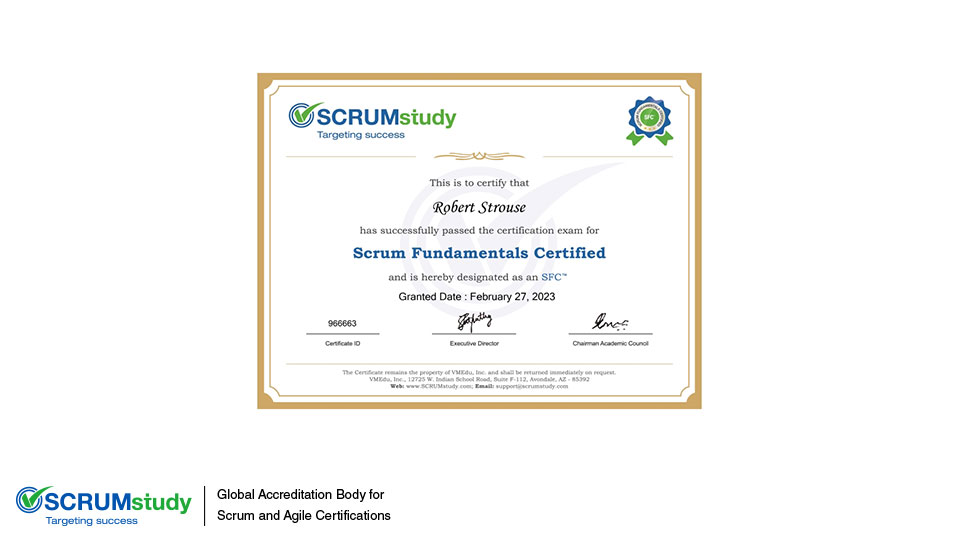
Scrum training online exams are typically the final step in earning certification and validating proficiency in Scrum methodologies. These exams assess participants' understanding of key Scrum principles, roles, events, and artifacts covered during the training. Online exams are often structured as multiple-choice or scenario-based assessments, designed to evaluate practical knowledge and application of Scrum practices in various scenarios. Participants can take these exams remotely, providing flexibility in scheduling while ensuring a secure testing environment. Successful completion of the online exam validates individuals' skills and knowledge, enabling them to confidently apply Scrum principles in their roles as Scrum Masters, Product Owners, or team members within Agile teams.
Agile Scrum training online exams are designed to assess and certify individuals in the principles and practices of Scrum, an agile framework for managing complex projects. These exams typically cover various aspects of Scrum, including roles, events, artifacts, and the values that underpin effective Scrum implementation. The SBOK Guide, or Scrum Body of Knowledge, serves as a comprehensive resource for understanding these components, providing a structured approach to learning and applying Scrum methodologies. Online training programs often include interactive modules, practice exams, and real-world scenarios to ensure that candidates are well-prepared for the certification exam. By successfully completing the Agile Scrum online exam, professionals demonstrate their ability to apply Scrum principles effectively in their projects, enhancing their ability to deliver high-quality results in a collaborative and iterative manner.
We will attempt to do a quick overview of some of the Scrum certifications that are currently being offered.
Next, let's discuss how to choose the right Scrum trainer. While it can be beneficial to find a Scrum trainer with a similar background to yours, it is not an absolute requirement. The framework and style of Scrum training can vary from trainer to trainer, so it's important to find one that matches your learning style.
The biggest positive of a formal Scrum training is that you learn everything in a controlled environment. You meet people who are also there to learn about Scrum and in case you have common background, it helps to understand the process and difficulties of implementation from outsider’s point of view. A formal training also helps you understand about the mistake which you may make due to the traditional project management concepts rooted in you.
The main purpose of any certification is to impart a common baseline of the knowledge. These Scrum certifications, compared to any other project management certifications have a very easy test. You should remember that getting a Scrum certificate is way easier than the implementing actual Scrum framework.
Scrum and Agile methodologies offer significant flexibility in implementation. However, it's crucial to maintain the core principles of the process. Project managers who modify essential elements of Scrum are often referred to as "Scrumbut." It is generally recommended to adopt Scrum in its entirety initially to fully understand its mechanics. Once you have a solid grasp of the framework, you can then make informed decisions about potential adjustments. Over time, you may realize that no changes are necessary.
You need to understand that nothing is more valuable than experience. Scrum or Agile Certification may only add some credibility and marketability to the individual.
Agile Scrum Certification exam tips
Posted bySCRUMstudy® on March 20, 2024
Categories Certification SBOK® Guide Scrum Training

Earning an Agile Scrum certification is a significant step for professionals aiming to excel in project management and improve their career prospects. Effective preparation involves more than just understanding Scrum principles; it requires strategic study habits, familiarity with the exam format, and a calm, focused mindset on test day. This guide provides practical tips to help you navigate the certification process, optimize your study efforts, and approach the exam with confidence, ensuring you are well-equipped to achieve your certification goals.
SCRUMstudy offers a comprehensive and convenient way to earn your Scrum and Agile certifications through online, live-proctored exams. This process allows candidates to take their exams from the comfort of their own homes, using a webcam and a stable internet connection. All exams are monitored in real-time and recorded for integrity purposes, ensuring a fair testing environment.
Application and Examination Process
To begin, candidates need to log into their SCRUMstudy account and apply for their desired exam. Upon approval and payment of the exam fee, they receive an email with details about the exam link, dates, and times. Immediate results are provided after submission of the completed exam, allowing for quick feedback and certification status.
Technical Requirements
Candidates must have a functioning webcam, as it is mandatory for the proctored exam. The webcam will be active throughout the exam, capturing the entire session to prevent any violations. The exam can be taken using the latest versions of popular browsers like Internet Explorer, Google Chrome, and Firefox, ensuring accessibility and compatibility.
Certification Benefits
SCRUMstudy certifications, such as Scrum Master Certified (SMC®) and Scrum Product Owner Certified (SPOC®), are recognized globally and help professionals enhance their knowledge and skills in Scrum and Agile methodologies. The structured exam process and immediate result provision streamline the path to certification, making it efficient and user-friendly.
By following these procedures, candidates can achieve valuable certifications that bolster their professional credentials and contribute to their career advancement in the field of Agile and Scrum methodologies.
What are some useful tips for preparing for the Agile Scrum Certification exam?
Posted bySCRUMstudy® on May 11, 2023
Categories Certification SBOK® Guide Scrum Training
Earning an Agile Scrum certification is a significant step for professionals aiming to excel in project management and improve their career prospects. Effective preparation involves more than just understanding Scrum principles; it requires strategic study habits, familiarity with the exam format, and a calm, focused mindset on test day. This guide provides practical tips to help you navigate the certification process, optimize your study efforts, and approach the exam with confidence, ensuring you are well-equipped to achieve your certification goals.
SCRUMstudy offers a comprehensive and convenient way to earn your Scrum and Agile certifications through online, live-proctored exams. This process allows candidates to take their exams from the comfort of their own homes, using a webcam and a stable internet connection. All exams are monitored in real-time and recorded for integrity purposes, ensuring a fair testing environment.
Application and Examination Process
To begin, candidates need to log into their SCRUMstudy account and apply for their desired exam. Upon approval and payment of the exam fee, they receive an email with details about the exam link, dates, and times. Immediate results are provided after submission of the completed exam, allowing for quick feedback and certification status.
Technical Requirements
Candidates must have a functioning webcam, as it is mandatory for the proctored exam. The webcam will be active throughout the exam, capturing the entire session to prevent any violations. The exam can be taken using the latest versions of popular browsers like Internet Explorer, Google Chrome, and Firefox, ensuring accessibility and compatibility.
Certification Benefits
SCRUMstudy certifications, such as Scrum Master Certified (SMC®) and Scrum Product Owner Certified (SPOC®), are recognized globally and help professionals enhance their knowledge and skills in Scrum and Agile methodologies. The structured exam process and immediate result provision streamline the path to certification, making it efficient and user-friendly.
By following these procedures, candidates can achieve valuable certifications that bolster their professional credentials and contribute to their career advancement in the field of Agile and Scrum methodologies.